Amplifying voices for clean air
Our Amplifying Voices strand supports the communities who are most affected by air pollution to advocate for change.
Read more

Health effects of air pollution
This year, the Environmental Audit Committee is examining air quality. We partnered with Green Alliance to take the committee out of Westminster and into South London to meet the people who live with air pollution every day.
How a policy is made matters as much as what it does. The questions asked, the evidence heard and the people in the room all shape the decisions that follow. Too often, the people who live with the consequences of a policy are the ones missing from the conversation.
Parliamentary committees lean heavily on traditional evidence: data and research from think tanks, academics, and civil society organisations. That work is important and valuable, but it can overlook the lived experience of the people most affected and fail to give those insights the weight they deserve.
Air pollution is a good example of this. There has been progress on improving air quality, but it’s not enough and the benefits haven’t been felt equally. People from racialised communities and people living in lower income areas continue to carry the heaviest burden. Until their voices are at the centre of how policy is made, efforts to clean up our air risk reinforcing the very inequalities they should be reducing.
In December 2025, the Environmental Audit Committee (EAC) announced an inquiry into air pollution. The EAC is one of Parliament’s most influential committees. It examines how far the policies and programmes of government departments and non-departmental public bodies contribute to environmental protection and sustainable development, and it tracks progress against environmental targets. Its cross-cutting remit makes the committee well placed to shape action on air pollution, of which there are multiple sources in urban areas, including construction, freight, transport, and wood burning.
The inquiry is likely to inform the next Air Quality Strategy, which means it’s a rare chance to influence how government acts on polluted air, and, crucially, to change who gets heard in the process. That’s why we partnered with Green Alliance to do something parliamentary committees rarely do: take the inquiry out of the committee room and into communities.
We took MPs to a primary school where children are campaigning for cleaner air, to a construction site where companies are applying good practice to reduce pollution, and into communities where people live daily with the consequences of air pollution. For many of these MPs it was a rare moment; they told us they don’t often get to hear these perspectives. In those local settings the conversations went deeper than they normally would, beyond the statistics to the reality of how polluted air shapes families’ lives. And MPs heard solutions too; practical, grounded, and already being led by communities themselves.
This wasn’t consultation; it was genuine engagement. People had the time and space to speak and be heard. At a time of record-low trust in public institutions, it felt like a small but significant step towards rebuilding trust, shifting power, and making policymaking more accountable to the people it affects most.
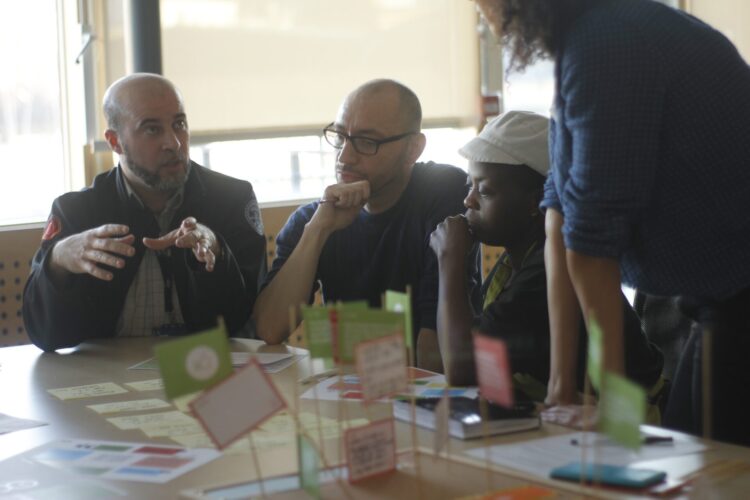
I was delighted to join Green Alliance, the EAC members, and our partners for the day. I saw a real change take place during the small-table conversations between MPs and community leaders who are deeply rooted in their communities. That direct exchange felt like a rare and powerful upgrade to the way democracy usually works.
The community leaders brought the concept of health equity to life. They didn’t just describe the problem, but they made MPs feel it, understand it, and engage. And together with community members, MPs engaged in discussions about practical, evidence-based solutions.
By the end, the MPs had added their voice to the ensemble as we discussed possible solutions and what recommendations needed to be given to Government to reduce air pollution. This would have been impossible to achieve in a parliamentary committee debating chamber.
There were surprises too. Parliamentary staff told us they were taken aback by how much fatigue communities expressed and how ignored and dismissed people feel. That this came as a surprise says a great deal about the distance between Westminster and the communities these decisions affect, and about why days like this matter.
Policymaking can’t stay locked in an exclusive, technocratic space. Policymakers must connect with the realities of everyday lives because the consequences of bad decisions are felt in everyday ways.
When the people most affected are excluded, the results are predictable: inequalities widen and trust erodes.
I was delighted that, following the site visit, the Chair of the Environmental Audit Committee, Toby Perkins MP, said:
“Air pollution is a serious problem, both for the environment and for the health of our communities. But how do we fix it?
“Our visit this week was an important part of the answer. It was an important opportunity to talk face to face with residents as well as experts, to understand their lived experiences of air quality policies and whether government and society is doing enough to keep them and their families safe.
“Their insights offer a unique and valuable perspective that we don’t always hear in Westminster and will directly inform our inquiry as we seek to make recommendations to government on how they can further improve air quality.”
Making participatory policymaking the norm is a real challenge and requires commitments to democratic renewal. Policymakers must proactively seek out different kinds of evidence, not just reports or data, but lived experiences and frontline knowledge.
My hope is that the next time a committee runs an inquiry, it makes a conscious effort to seek out the people it wouldn’t usually hear from, to meet them in their own spaces, and engage in genuine dialogue.
The EAC inquiry into air pollution is one moment but it represents something about how decisions should be made. The people who have first-hand experience of the health effects of air pollution understand it in ways data can’t capture. Making policy with them, not just for them, is how we build an Air Quality Strategy that works and begin to rebuild trust between communities and the institutions that serve them.
That’s the standard we’ll keep pushing for.
Health effects of air pollution
Our Amplifying Voices strand supports the communities who are most affected by air pollution to advocate for change.
Health effects of air pollution
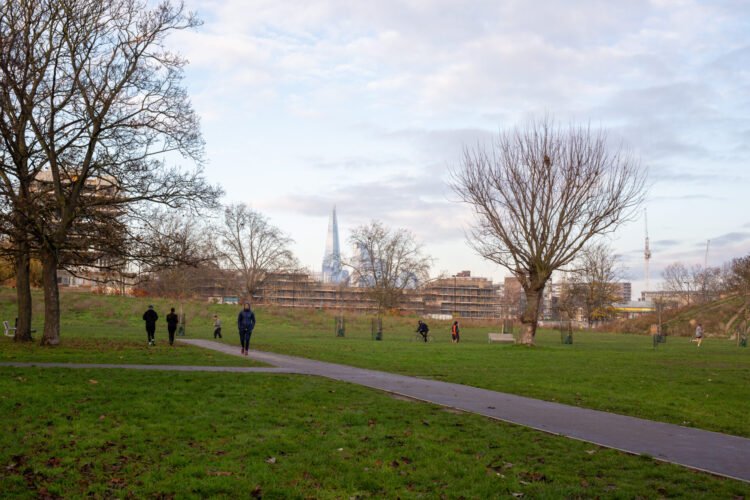
We’re proud to support Asthma + Lung UK’s new campaign, which involves working with communities to better inform air pollution policy. In this article, Asthma + Lung UK explain the value of participatory policymaking.
Health effects of air pollution

We believe people have a right to accurate and accessible information about anything that harms their health, including wood burning.