Current partnerships
We work with local, city, national and international organisations to help urban areas become healthier places to live.
Read more

Our work
We work on urban health problems in the inner-city South London boroughs of Lambeth and Southwark, to make them healthier places to live.
The inner-city London boroughs of Lambeth and Southwark are our home. They are two central South London boroughs south of the Thames, only two miles from the City of London.
The two areas are densely populated – twice the average in London – and on a par with Cairo or New Delhi. They have a rich social and ethnic mix, including large Black and LGBT+ communities.
We see a large amount of population churn and the boroughs currently have a population of around 600,000. This makes them roughly the same size as Athens, Stuttgart, or Boston.
A quarter of the population of Lambeth live in poverty
Over a third living in Southwark live in areas with the highest levels of deprivation in England
We’re working to find solutions to complex urban health problems in our place. But we don’t just want change in London.
Where we work is like so many other places around the world. Using data from the UN-Habitat’s City Prosperity Initiative alongside diversity data, we’ve started identifying cities with similar characteristics to London and our boroughs.
New York, Paris, Melbourne, Sao Paulo, Shanghai and Mexico all hold similarities to London. Glasgow, Detroit and Birmingham hold similarities specific to Lambeth and Southwark.
Our work across these South London boroughs gives us a practical base for understanding what drives health inequality in cities, and how to address it. Read our global perspective on urban health reports to see how other cities are responding.
We share our insights and practical learning to help others working on urban health. Working together, we can better understand how people in other cities are addressing inequalities and the health impact of living in urban environments, guided by our strategy.
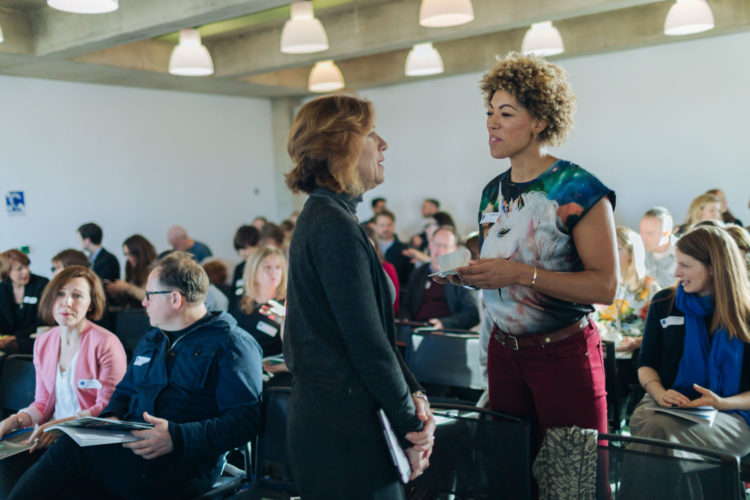
We work with local, city, national and international organisations to help urban areas become healthier places to live.
Our work

By 2050, nearly 70% of the world’s population will live in cities. We explore what distinct health challenges and opportunities urban areas have.
Who we are

Our focus on complex health issues that disproportionately impact people living in cities.