Shifting power to communities in South London through the THINC fund
The THINC fund supports community-led projects that address health inequities in South London.
Read more

Innovation
Together with Doing Social, we explored how to make our decision-making more inclusive by involving people with lived experience of health inequities in Lambeth and Southwark.
No one understands people’s lives better than they do themselves. Yet all too often, healthcare systems, policymakers and funders make decisions for communities rather than with them.
In 2024, we set out to rethink how we make decisions. We explored different ways to engage and involve people with lived experience of health inequities in the communities we work in. Our aim has been to strengthen the real-world impact our programmes have in Lambeth and Southwark.
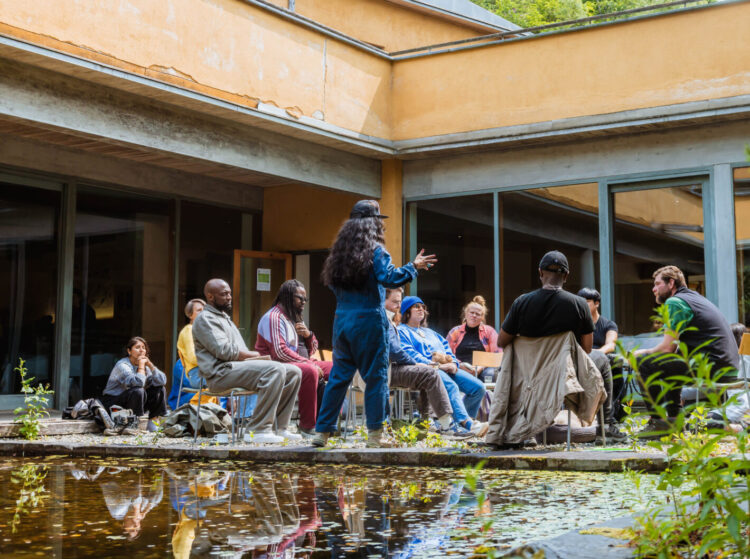
We joined-up with Doing Social as a strategic learning and co-design partner in the Transformative Participation in Practice project, drawing on their inclusive innovation principles and transformative participation methodologies.
Together, we shaped the work around two core questions:
This initial phase focused on co-designing how participatory decision-making could work in practice. Questions about who should hold formal decision-making authority were explored as future possibilities.
Through this partnership, Doing Social helped build organisational buy-in for a more participatory funding pathway and generated evidence from both internal colleagues and partners – including through an early partner workshop – demonstrating the value of participatory approaches in practice.
Alongside this, the work focused on identifying the conditions through which participation can feel meaningful – particularly in contexts shaped by unequal power and institutional constraints, drawing insight from wider participatory practice.

Following this phase, the work moved into a reflective stage to gather feedback on the findings. Doing Social facilitated listening sessions with internal colleagues and community partners and gathered written reflections from external funders.
As part of this stage, Doing Social collaborated with Akil Benjamin to support two further workshops and to produce an audio recording of the report, enabling contributors to engage with the findings in more accessible ways before sharing feedback:
This feedback deepened our understanding of the barriers partners face when engaging with organisations like ours, while also recognising the reasons why we sometimes need to move at a certain pace.
So far, we’ve learnt several important things about what it takes to be a more inclusive funder:
This work has helped us better understand how our structures might become more inclusive, and what community members should reasonably gain from participating.
In 2026, we’ll recruit three new members to Impact on Urban Health’s governance committee, joining our trustees to approve funding for projects over £150,000, strengthening our decision-making and helping shape our strategic direction.
We’re also putting plans into action to ensure we have the right conditions in place to become more participatory in our funding decision-making. This includes making sure community members are meaningfully empowered to make decisions and that our approach isn’t tokenistic and builds on what we’ve learnt from our partnership with Doing Social, insights uncovered from Impact on Urban Health projects and best practice from other funders.
Our goal is to strengthen our ability to create real change in the communities we work in. This means being open about the trade-offs involved in building strong relationships with community representatives, developing the right processes as we become more participatory and delivering impactful projects in Lambeth and Southwark.
We’ll continue learning as we embed these new processes and apply insights from our experiences.
Innovation

The THINC fund supports community-led projects that address health inequities in South London.
Innovation
In this guest blog, Josh Artus from Centric Lab shares what we’ve learnt through partnering to deliver the Urban Health Council.