Hi, I’m Phool. I’m 20, I live in East London, and I’m in my second year studying Geography at the London School of Economics. After university, I want to work somewhere in the environmental and social justice space. Outside my degree, you’ll find me doing karate, playing the flute or watching films.
I first heard about Asthma + Lung UK and OUR AIR, OUR VOICES through an outreach email, while I was interning at the climate action charity Possible in the summer of 2025. My line manager forwarded it to me, thinking I might be interested.
Before I got involved, I was aware of air pollution and its effects on health, but I’d never really learned about it in depth at school. More recently, at university, I’d come across the concept of environmental racism, and it felt directly connected. OUR AIR, OUR VOICES was one of the few opportunities I’d come across that actually wanted to engage young people; not just to educate us about air, but to understand our thoughts and experiences on the issue. To actually be part of a campaign that puts the voices of young people at its heart, and influence real policy change, was exciting.
What we did
OUR AIR, OUR VOICES is a participatory research project, run by Asthma + Lung UK in partnership with Impact on Urban Health, that involves a diverse group of young people in the process of co-creating clean air policy.
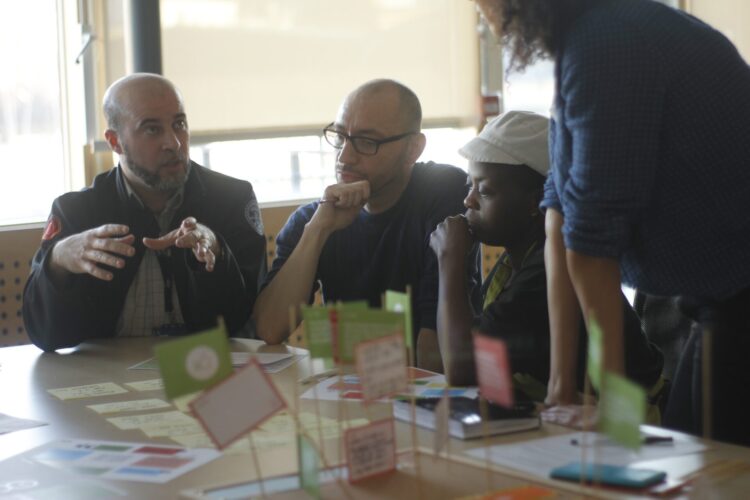
It began with a two-day workshop in August 2025, and what I loved was the way learning and creativity came together. I was shocked by the many sources of air pollution, the scale of the health burden, and how much air quality is bound up with transport, green space and so much else.
One session was led by horticulturalist Christopher Collins, where we learnt to grow plants. It was the first time in a very long time that I’d actually touched soil and plants, and it reminded me just how disconnected from nature my own life had become.
We drew our idea of a “Clean Air Utopia” which taught us the importance of thinking big. So often people are presented with binary ways of how the world should work, the solutions needed, and which experts are most deserving of coming up with them. This flipped the script: we were the experts.
We also heard from grassroots campaigners at Choked Up and Live + Breathe, who showed us very different ways of communicating about clean air, from Choked Up’s raw depiction of the unfairness of toxic air to Live + Breathe’s more optimistic take on the ideal world. One line from Love Ssega has stayed with me: a system can be disrupted by resonating with people, which is connected to how an issue is framed. And in a creative writing session with Poetic Unity, we wrote poems about air pollution and the world we wanted, a reminder that imagination can unlock new ways of thinking.
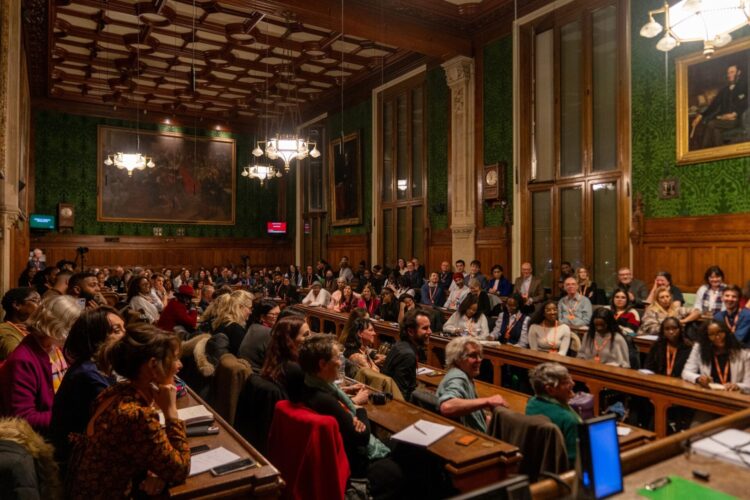
In November, some of us were invited to hand in a petition at 10 Downing Street, calling on the Government to meet the World Health Organization’s 2021 air quality guidelines. Having been part of the project from the very beginning, standing there to hand it in felt empowering.
What co-creation can do
I came away convinced that co-creating policy works. But one experience in particular showed me that it isn’t a complete answer.
During the workshop, we discussed low-traffic neighbourhoods (LTNs). Some participants shared their negative experiences of LTNs in their local area, and I think those feelings definitely need to be explored. Having learnt about LTNs during my internship, I was also aware of the wider evidence showing they can improve air quality, road safety and encourage more sustainable travel if rolled out correctly What struck me was that these aren’t necessarily contradictory. A scheme can be poorly designed in one place while the overall approach still has proven benefits. It reinforced for me why policymakers need to engage communities from the outset so local concerns can shape how policies are implemented.
For me, that’s the lesson: lived experience and evidence must work together. Co-creation needs to sit alongside good research and support for people to meaningfully participate in decision-making. Otherwise, we risk losing public support for schemes without fully understanding the reasons behind people’s concerns. The better response is to look closely at what’s gone wrong and improve it with the people it affects.
Why affected communities must be in the room
The biggest thing I took from this experience is that, on any issue in society, the people affected need a real say in how it’s solved. And I mean genuine decision-making power, not just being asked for an opinion. When that doesn’t happen, interventions risk missing the mark, deepening existing inequalities or creating new ones. People end up feeling something has been done to them, rather than with them, and trust erodes. That’s why it matters so much that organisations like Asthma + Lung UK work directly with communities that bring lived experience, help hold those in power to account, and feel able to keep speaking up about the things that affect them.
Has my view on air pollution changed? It’s broadened. I understand now just how vast the problem is, and how its near invisibility makes it so easy to overlook and so hard to act on. But I’m also more hopeful, because I’ve seen first-hand what co-creation can achieve.
If there’s one thing I’d ask people to take away, it’s this: clear, direct and accessible routes for communities to shape these decisions shouldn’t be treated as a nice-to-have, but as a necessity. Caring about the environment is, in many ways, a privilege. It tends to be those with the time, resources and education who get to take part. So we must make space for the people most affected and least likely to be represented. That’s how we work towards a society where we can enjoy life while breathing clean air.