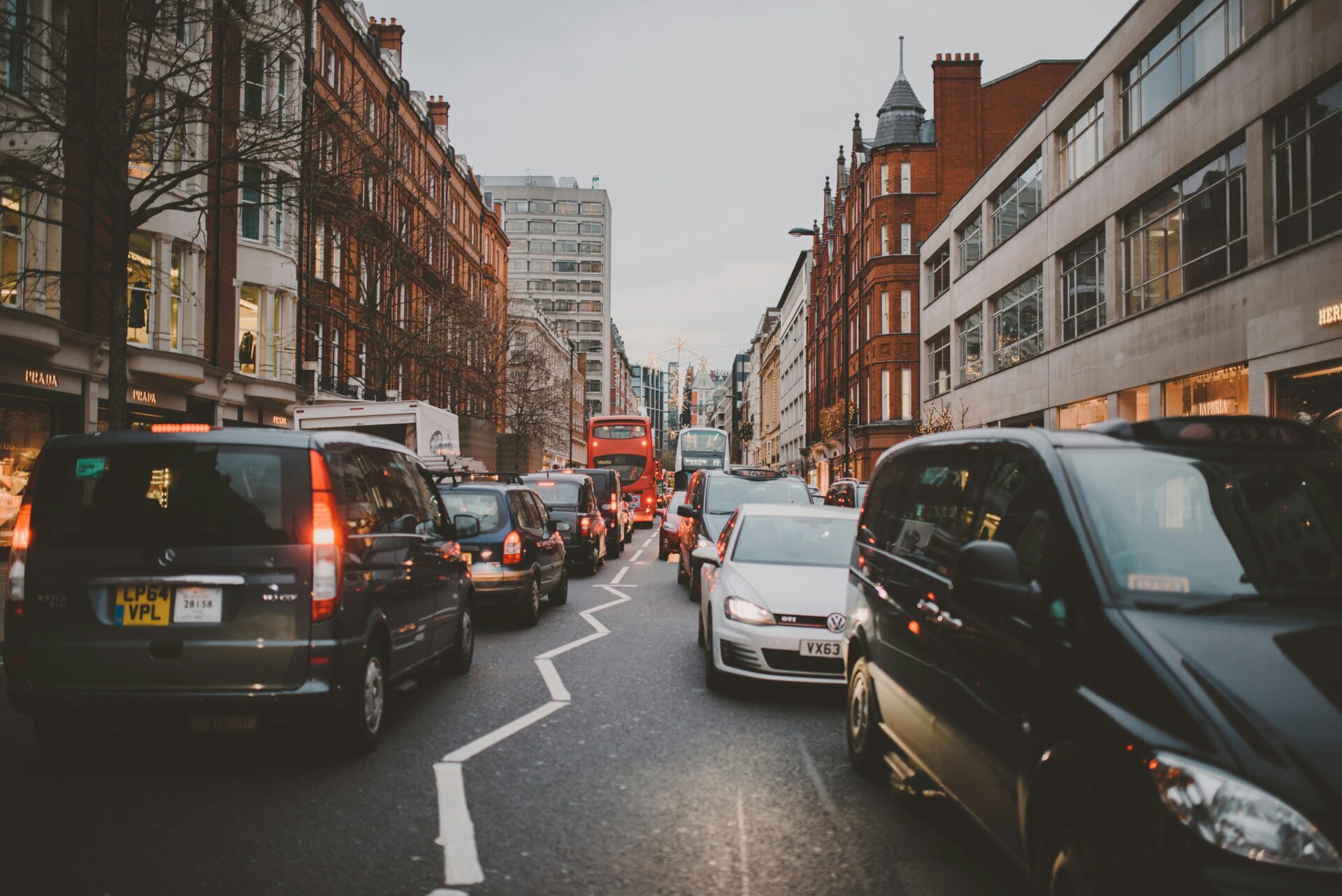
This news was first covered by The Times: “London councils run ‘dirty’ diesel fleets despite green push”.
Despite evidence of harm and London’s clean-air commitments, most borough councils continue to operate fleets dominated by diesel vehicles. Our Freedom of Information requests to all 32 London boroughs show that most councils across London continue to run diesel-heavy fleets despite the well-established health effects of air pollution, and the capital’s ambition to cut road-based emissions.
Council fleets include the vehicles that local authorities use every day to deliver services, such as bin lorries, street-cleaning vehicles, maintenance vans and transport used by housing, highways and parks teams. These vehicles operate extensively within neighbourhoods, often on residential streets, meaning their emissions directly affect the communities they serve.
While air pollution affects everyone, it disproportionately harms children, people from racially minoritised communities, and those living in lower-income neighbourhoods.
Of the councils that replied, seventy-one per cent confirmed that diesel makes up the majority of their fleet [1]. Electric vehicles account for 21%, far short of the scale required to meet London’s clean-air commitments.
In some boroughs, diesel vehicles remain almost universal and the picture varies dramatically by borough. Hillingdon sits at the bottom of the table, with 97 per cent of its vehicles still running on diesel. Councils with the highest percentage of diesel vehicles in fleet were as follows:
- Hillingdon London Borough Council (97%)
- Richmond upon Thames London Borough Council (96%)
- Bexley London Borough Council (95%)
- Barnet London Borough Council (94%)
- Hounslow London Borough Council (94%)
Despite the number of diesel cars registered in London falling by 44 per cent between 2019 and 2023, some authorities are still expanding diesel fleets: Havering has added one hundred new vehicles to their fleet in five years, every one of them diesel, as reported in TfL’s Car ownership trends report in 2024 (pdf).
A handful of councils demonstrate that transition is possible. Lewisham has almost completed the shift, running 285 electric vehicles and only four diesel vehicles. Westminster has just two diesel vehicles left. The councils leading the transition to electric, with the highest proportion of electric and hybrid vehicles were:
- Lewisham London Borough Council (88%)
- Hammersmith and Fulham London Borough Council (82%)
- Westminster City Council (60%)
- Kingston upon Thames London Borough Council (52%)
- Lambeth London Borough Council (30%)
The health consequences of diesel pollution are well-established. Diesel engines emit nitrogen dioxide (NO₂) and fine particulate matter (PM2.5), both proven to damage heart and lung health. The World Health Organization classifies diesel exhaust as carcinogenic to humans and research from Public Health England estimates that air pollution contributes to around 4,000 premature deaths in London annually.
These harms are not distributed evenly. According to the government’s data, urban areas are home to a higher proportion of households living in poverty compared to rural areas, and there is extensive evidence of a strong correlation between low incomes and poor health.