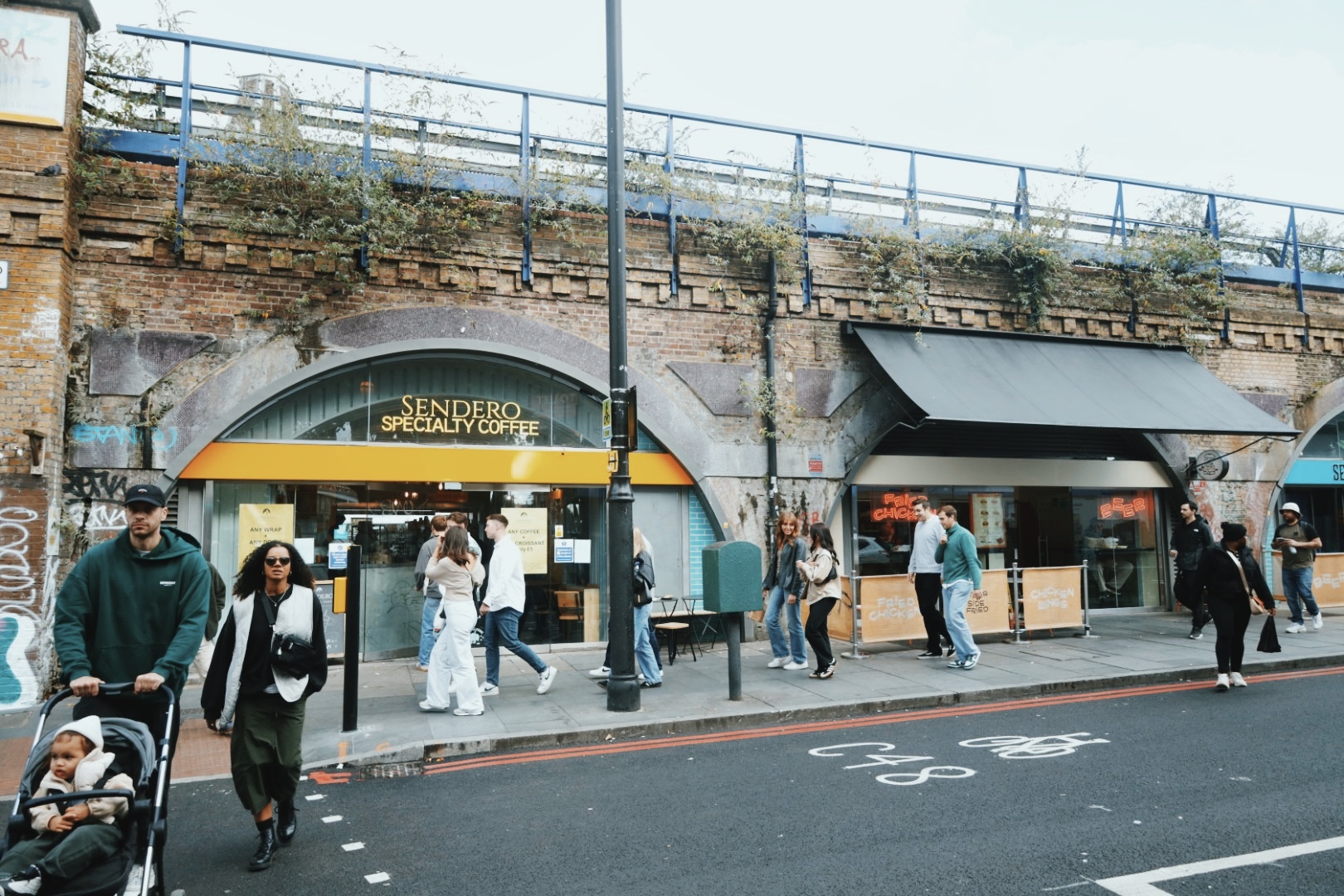
We are place-based and Lambeth & Southwark is our home. Everything we do should contribute to positive change here. But our impact reaches far beyond our boundaries. We share experience and evidence with other places. And we fund collaborative projects and programmes that enable learning from elsewhere. Starting with communities here, we strive for health equity in urban areas everywhere.
Partners should expect from us:
- We will put impact on people in Lambeth and Southwark first. We will not fund work that cannot have an impact here.
- If the change we want is most effectively made at a national or metro level, for example with policy change, that’s where we will work.
What we’re aiming for:
- Where we learn, we will endeavour to share. We will work with partners to look for ways to highlight the work with people in other places.
- We will learn from new research and evidence, but prioritise the knowledge of local people and organisations.
All people deserve the resources, effective treatments and services that they need to live healthy lives. We take an anti-racist approach because we recognise the integral role race plays in the nature and persistence of health inequity, especially here in Lambeth & Southwark. Our approach is also intersectional, because considering other protected characteristics or factors – such as socioeconomic status – is integral to advancing health equity too.
Partners should expect from us:
- We will not invest in work that does not aim to have an impact on racial inequalities.
- Because Lambeth and Southwark is where we centre our work, and because of our history as a Foundation, we will prioritise the inequities most affecting Black residents.
- We will consider racial inequity in our overall strategic approach as well as in individual funding decisions. We seek to consider racial equity in who and how we fund as well as what we fund, and will work with partners to improve our practice. We will use our power and influence as a funder to increase the work others are doing to consider racial inequities.
- We will take steps to measure the diversity of the organisations that we partner with and use insights to improve our practice. We do this by collecting data on our funding, reviewing this data internally and completing the Funder for Race Equality (FREA) racial justice audit. We are working towards publishing details of where our funding has been distributed including available demographic breakdown.
- We keep our own performance as an anti-racist organisation under review through measuring progress against our organisational Foundation DEI Action Plan, and committing resources to improving upon it; that we have an organisational Anti-Racism Policy which applies to all Foundation colleagues, interns, trustees, volunteers, vendors, and other contractors or third parties, with the intention of creating organisational accountability and guidance around anti-racism.
We have said that we place people at the heart of our work. It is critical that knowledge comes from those with lived experience. They help us understand what’s needed and what works. There is also a critical place for using other types of data and evidence to inform what we fund and to help us learn and understand impact. Because they’re stronger when combined, we bring these all together to inform our own and others’ work.
Partners should expect from us:
- We will value lived experience in how we choose what to work on.
- We will value lived experience in how we learn from and understand progress on the things we and our partners care about.
- We will continue to value the role community research has in both increasing understanding and valuing the agency of the experience of people in Lambeth & Southwark.
- We will do this alongside other forms of data and evidence.
- We will take steps to make our funding processes more participatory.
- We will take steps to amplify the voices of the people and organisations in our place where we have the power to do so.
We have said that we make change possible by connecting and collaborating with all those shaping urban areas. We fund solutions, processes and systems that move us towards health equity – collaborating with community groups, small firms, global corporates, large institutions, established charities and government. We drive innovation by taking informed risks with our investments and connecting all work to local communities.
Partners should expect from us:
- We will work with a range of partners and use our values as one of our frameworks for deciding whether and with whom to partner.
- We will deliberately involve perspectives that are different to our own.
- We will take risks, and do not expect everything we fund will achieve everything it set out to. We balance those risks against the potential impact.
- Where possible, we will assume as much of the risk as is practical to do so, rather than expecting our partners to take it all – but we appreciate that partners are always taking risks.
- We will look for ways our partners can work together, on projects in which we are a partner, and beyond.
- Because we will work with a range of partners, not everyone we work with will share our outlook exactly.
We have said that drivers of climate change also drive ill health and health inequalities. We know that the climate crisis is the most significant long-term risk to achieving health equity. So we continue to learn and seek ways to integrate climate thinking into our work.
Partners should expect that:
- We will look for ways in which climate can be integrated into our work, though this is a new and still evolving area for us.
- We will look for the ways a commitment to climate justice can contribute towards our focus on health equity.
- We will not do so in a way that distracts us from our mission of health equity, nor our other core commitments. Instead, we will be looking for co-benefits.
- That as our understanding of how to integrate a climate lens improves, this will improve our practice and allow us to be clearer on what this commitment means to us.