

Bolstering financial support during the first 1001 days of a child’s life
Stronger financial support in the first 1001 days of a child’s life is needed to ensure children in the UK get the best start in life.
Read more

The Children’s mental health programme exists to break the links between poverty, racism and poor mental health. We recently entered a ‘wind-down’ phase following the decision to close the programme. Prior to this, we had an increasing focus on the early years of a child’s life (the first 1001 days), due to the rapid cognitive, physical, emotional and social development that happens in this period.
This piece follows on from our last blog around financial support needed in the first 1001 days and unpacks what the government’s school readiness targets mean for the most disadvantaged children and their families.
Preparing for school, or school readiness, is a metric of a child’s confidence, skills and habits that will help them transition into full-time primary education. It includes things such as using the toilet and washing their hands, listening to and following simple instructions and interacting happily with others.
Under Keir Starmer’s leadership, the Labour Party set a target of 75% of 5-year-olds in England having a ‘good level of development’ (GLD) at the end of reception by 2028.
We funded Institute for Government (IfG) to understand why boys from families living on lower incomes were being left behind by policymaking. In 2024-25, only 44% of this group were school ready by age 5. Yet policies are rarely developed in an equitable way to ensure the most disadvantaged groups benefit. This is emphasised further when you look at children eligible for free school meals (FSM). A disproportionate number of children living in poverty have also been identified with SEND needs, where poverty is acknowledged as both a cause and consequence of children having SEND.
Although there are specific reasons why there is a gendered difference in attainment at age 5 in this research, for example the role played by gendered stereotyping, there is also a large body of research about the overarching causes of disadvantage for FSM-eligible children. Economic hardship puts families under persistent stress, and affects their ability to access essential needs, safe places to play and a good quality of education.
And it’s not just about attainment. Children living in low-income households are more likely to experience housing insecurity, food insecurity and fuel poverty, putting them at a higher risk of a range of health issues, and in particular poor mental health. Policymaking has failed to consider the disproportionate impact of early years policies and provision on this group, and our political system does not incentivise government to prioritise them. Successive governments have focused on childcare entitlement, which leaves little funding available for other interventions. The systems and structures that impact children are incredibly complex and take time to meaningfully shift, but responsibility for these are fragmented across departments. The government’s focus on GLD also risks further entrenching existing inequalities, by potentially disincentivising a focus on the children who are currently furthest from achieving school readiness.
One area the Children’s mental health programme has focused its efforts on is transforming the school environment to support children to thrive. We have supported a range of work that seeks to change how schools operate. Class13 for example, are piloting an approach to transforming schools into equitable spaces.
While Surrey Square Primary School takes a community centred approach, supporting children, their families and the wider community beyond what happens in the classroom. This approach has a profound effect on children’s outcomes: the average percentage of children ‘on track’ in nursery is 26%, and by the end of year 6 an average of 81% of children are on track.
We commissioned The Liminal Space to explore what an additional cash grant from the government during the first 1001 days of a life would look like if designed by local mothers. It was during this project that the Government’s GLD target, to have 75% of children ‘school ready’, was announced and was being widely discussed in the sector. We wanted to know what this actually meant to those raising children 0-5 years and who are so often left out of these debates.
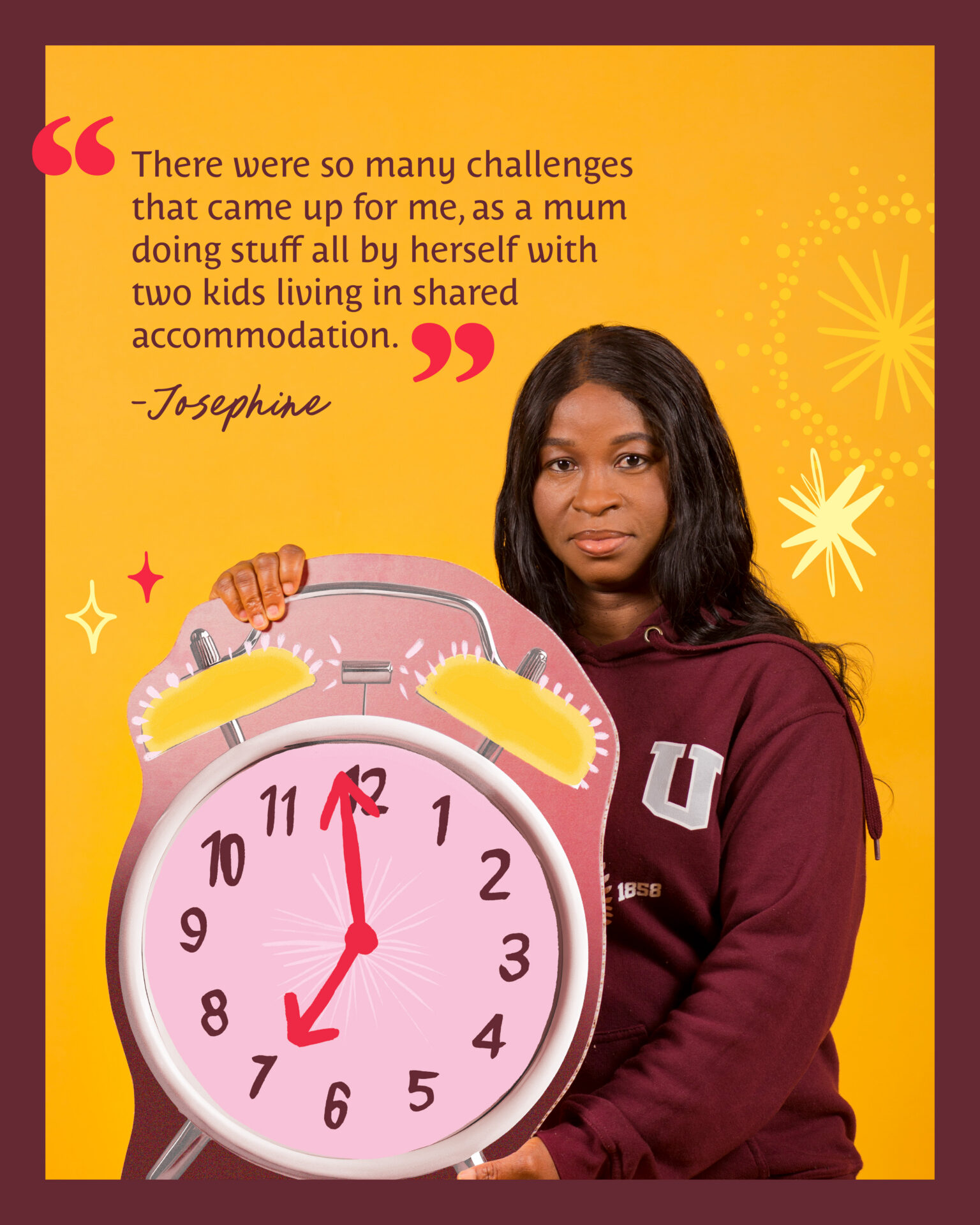
The Liminal Space captured stories from these local mothers, offering a window into a parent’s experience of preparing their child for Reception.
A government’s focus on the early years is encouraging and welcome, particularly due to the importance of the first 1001 days on a child’s long-term health and wellbeing. However, targets to raise school readiness alone are insufficient, and don’t consider the deeper issues – which groups of children are not reaching these targets and why and can act to create perverse incentives.
In order to meaningfully shift school readiness and child development, policymaking needs to be equitably designed, to bring the most disadvantaged groups up too. IfG has proposed three things the Department for Education should consider as it implements the Best Start in Life strategy:
Child poverty is an incredibly pervasive issue that affects every single aspect of a family and child’s life. The testimonies from local mothers highlight just how difficult it is to raise a child in practice and reach these arbitrary goals placed on children. We urge the government to engage directly with those with lived experience of poverty if they want to meaningfully shift the reality of children in the UK.
Full report from The Institute for Government: ‘Starting behind, staying behind’.
Children's mental health
Stronger financial support in the first 1001 days of a child’s life is needed to ensure children in the UK get the best start in life.
Children’s mental health
With Parent Action and Citizens UK
Children's mental health
We have worked alongside families, lawyers, housing professionals and health experts to develop guidance for supporting neurodivergent children and their families when forced into temporary housing.