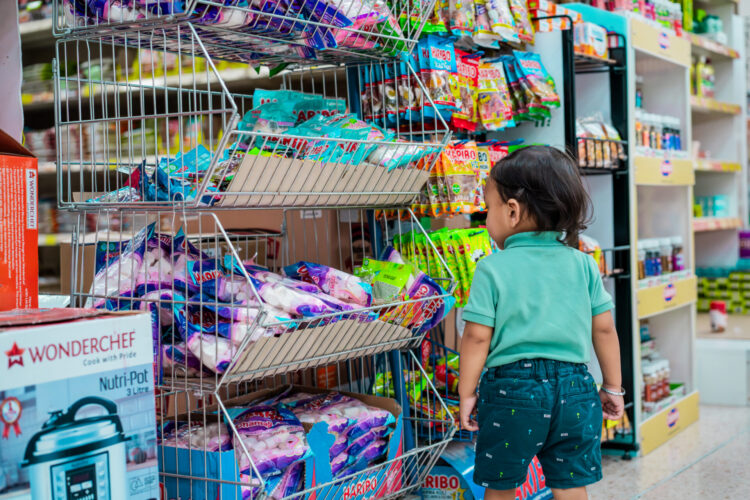
Imagine you are shopping for your baby. You’re faced with shelves of pouches and snack products in every colour, brand and flavour, all competing for your attention. You pick up a pouch or some baby snacks. The packaging looks healthy, the branding looks familiar and it proudly says ‘no added sugar’. You believe it’s a healthy option. But what if that product still contains significant amounts of sugar?
That’s the reality facing parents in the baby food aisle, and one of the reasons we’re concerned about the slow progress being made to improve commercial baby and toddler foods.
This Sugar Awareness Week, we’re asking why parents still can’t trust what they’re being told about sugar in baby and toddler foods.
Parents shouldn’t have to second-guess what’s on the label
The early years are when taste preferences and eating habits are formed. Parents buying a pouch or snack pack promoted for babies should be able to trust that it will not harm their child’s health and development. Yet the evidence continues to show that many commercial baby and toddler foods are high in sugar, and that the way they are labelled can make them appear healthier than they are.
When we spoke to parent ambassadors from the Early Years Food Coalition, several described how they had trusted baby food brands when they first started weaning. They assumed that products specifically marketed for babies would be healthy and appropriate for their age. It was only later that some discovered how much sugar certain products contained.
One parent described having the time to scrutinise sugar content as a “luxury” when shopping with a young baby. And that’s the point. Parents are already juggling enough. They shouldn’t need to become nutrition experts, decipher ingredient lists or question every marketing claim when shopping for the healthier options for their child.
Yet that’s exactly what the current baby food market asks them to do.
‘No added sugar’ doesn’t mean low sugar
One of the biggest sources of confusion is the familiar ‘no added sugar’ claim. It sounds reassuring, but it doesn’t necessarily mean a product is low in sugar.
When fruit is puréed, juiced or concentrated, its cell structure is broken down and the sugars it contains are released. Under the UK definition, these are free sugars, the same category as table sugar, honey and syrups – the type of sugar health advice says we should all eat less of. Many baby and toddler products, from pouches to bars and puffs, rely on fruit purées and concentrates for sweetness, which allows them to claim ‘no added sugar’ while delivering significant amounts of free sugars. The Government’s guidelines themselves recommend reducing the use of fruit purée to cut free sugars.
So a product can be high in free sugars while still carrying a ‘no added sugar’ claim. Legally allowed labelling can still leave parents with a misleading impression.
And it’s not just manufacturers’ claims. Earlier this year, we raised concerns about Boots’ in-store messaging, including its reassurance that “If it’s on our shelves, it’s good for baby”, displayed above products that can be high in free sugars.
When both brands and retailers reassure parents that products are healthy, why would they question them?
The ‘no added sugar’ claim has been shown by a wealth of research to be misleading parents in to believing that these products are healthy and low in sugar. Parents find this confusing and want clearer labelling. It’s high time the baby food industry stopped health washing high sugar products. Clamping down on misleading marketing through mandating the voluntary industry guidelines will be essential to achieve this.
– Dr Victoria Sibson, Director at First Steps Nutrition Trust
Why does this matter for babies?
Too much sugar early in life can have significant health consequences. More than one in five five-year-olds in England have experienced tooth decay. In 2025 to 2026, prevalence of obesity was 10.7% among children in reception and 22.8% in children in year 6. Excluding the peak in 2020 to 2021 during the pandemic, this is the highest obesity prevalence seen in reception since the NCMP began in 2006 to 2007.
Sugar can also shape what children learn to enjoy. Foods that rely heavily on sweet fruit flavours, including those that mask vegetables, do little to help babies become familiar with the less sweet and bitter tastes that underpin a varied diet later on. Puréed products in spouted pouches are easy to consume quickly, which may also make it harder for the child to recognise their own fullness.
A baby food market still built on sweetness
In August 2025, the Government introduced voluntary industry guidelines intended to improve the nutritional quality of commercial baby foods, including reducing sugar and encouraging more savoury products. Manufacturers were given 18 months to make changes.
But with the February 2027 deadline now only months away, the early evidence is concerning. While some manufacturers are making improvements, progress remains slow and inconsistent.
Which?’s interim assessment found that, halfway through the implementation period, 18% of a sample of products still failed the sugar guidelines, which is the same proportion as before the guidelines were introduced. Only three products had been reformulated into compliance. The variation between brands was striking: 7% of HiPP products failed, compared with 52% of Kiddylicious products, showing that lower sugar products are achievable if companies act to follow the guidelines.
Snacks marketed to babies and toddlers are a particular concern. When Food Active and the Health Equalities Group assessed 91 baby snacks and finger foods against the WHO’s Nutrient and Promotion Profile Model, 81% failed on added sugar. These findings are particularly troubling when we consider how common baby snacks have become. NHS guidance says babies under 12 months don’t need snacks, yet Government data shows that three in four babies aged 8–10 months are given shop-bought baby snacks at least once a week.
Recent research in Archives of Disease in Childhood also found that many puréed products in spouted pouches were high in sugar and lacked the texture and nutrient density babies need, with only 8% meeting the researchers’ criteria for suitable complementary food.
The issue isn’t simply how much sugar these products contain. It’s also how they are presented to parents, often using seemingly reassuring front-of-pack claims, attractive packaging and messages suggesting they are a healthy option.
Parents should be protected from misleading marketing
The responsibility for improving baby food shouldn’t sit with parents trying to make sense of confusing labels and overwhelming variety in a supermarket aisle. It should sit with the businesses making and selling these products, and with the Government responsible for setting and enforcing the standards.
The Commercial Baby Food Review is currently evaluating more than 800 products against the full scope of the guidelines, including sugar content and marketing claims and statements. Our findings will help establish how far manufacturers have gone in improving their products and marketing practices.
Katharine Jenner, Executive Director of the Obesity Health Alliance, said:
“The latest National Child Measurement Programme figures should be a wake-up call. We are seeing some of the highest levels of childhood obesity on record, yet too many of the policies that could help create healthier food environments for children remain delayed or waiting for action.
“Parents deserve clear, transparent information about the food they buy for their babies and toddlers. The Government should ensure commercial baby food is included within its Healthy Food Reporting and Targets framework, with proportionate targets to reduce sugar and improve nutritional quality across the sector. If we are serious about giving every child the healthiest possible start in life, food businesses must be accountable for the products they make and sell.”
In the meantime, the evidence supports a need for stronger guidelines on sugar limits for commercial baby and toddler foods, and for marketing and labelling rules that stop misleading claims like ‘no added sugar’ being used on products that are high in free sugars.